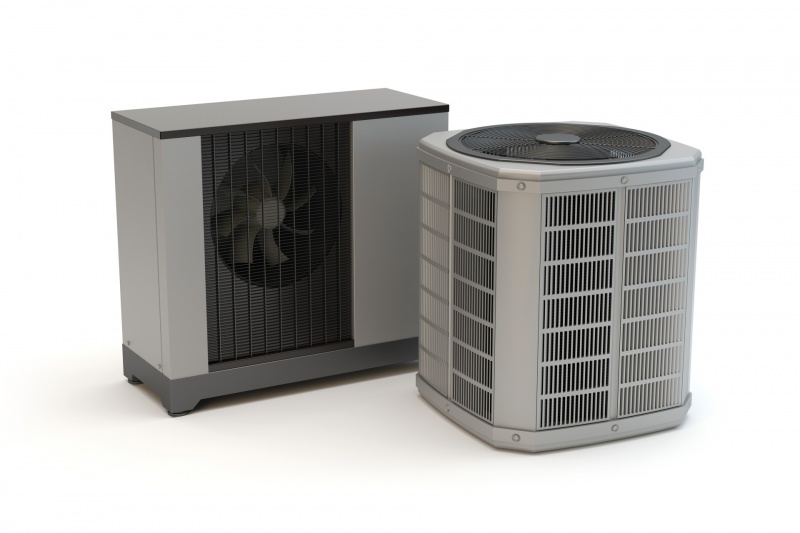
If you’re considering getting a heat pump for your home, that’s great! But you’ve still got some research to do. Can it fully replace both your air conditioner and your heating system? What are the options? What are ducted and ductless heat pumps, and what are the benefits of each? Knowing these details will help you make a decision you’ll be happy with long term—and learning whether a heat pump is best for ac services in your home is a great place to start.
What Is the Difference Between Ductless and Ducted Heat Pumps for AC Services?
- Ducted heat pumps: Use a central air handler and a network of ducts to distribute cooled or heated air throughout the entire home. These systems are common in homes that already have existing ductwork.
- Ductless heat pumps (mini-splits): Provide heating and cooling directly to individual rooms through wall-mounted indoor units, eliminating the need for ducts.
- AC service considerations: Ducted systems require maintenance of ductwork and central components, while ductless systems focus on servicing individual indoor units and filters.
Choosing the Right Heat Pump Size for Your Home
Before you settle on a specific heat pump, some calculations need to be made. A qualified technician can assess the size and layout of your home to determine the size of the heat pump system you need. Just like a traditional central air conditioner, a heat pump must be chosen to precisely fit the needs of the home.
If it’s either too large and powerful, or too small and not powerful enough, extra wear and tear and strain on the compressor will occur, increasing the likelihood that the heat pump will need frequent repairs, and shortening the life expectancy of the system.
Heating Performance of Ducted vs Ductless Heat Pumps
Because heat pumps transfer heat from one location to another rather than generating heat, they are the most efficient option that exists for home heating. And it doesn’t need to be warm in order for the system to bring warmth into your home—the outdoor air just needs to be warmer than the very cold refrigerant. If you’re upgrading from an older system, it may also be worth exploring whether heat pump replacement for ac services could improve your home’s efficiency.
In temperatures as low as 40 °F, heat pumps maintain this incredible efficiency, so spring and fall heating costs can be reduced dramatically. But our winters drop well below that temperature, sometimes for weeks at a time! We’ve got good news, though. A dual-fuel system can provide auxiliary heat as needed during the deepest winter chill. You can also consider a cold-weather heat pump that works efficiently in colder temperatures.
Ducted vs Ductless Heat Pumps: Key Differences
If your home already has a system of ductwork, the simplest heat pump installation would make use of that existing framework and continue to use the ducts to convey heat throughout your home. If your home has no ductwork, or the ductwork is in very poor condition, you might consider a ductless mini split alternative in Boston.
This involves making a small hole in your exterior wall for the conduit which contains refrigerant, drainage, and power lines. Inside your home, air handlers are mounted on walls in separate parts of the home, each with its own thermostat for zone control, further reducing energy waste by only heating or cooling as necessary.
If your home does have ductwork and you’d like to continue to use it, you should have it inspected to see if any sealing or repair is necessary. While the operating cost of a ductless system is lower, the inconvenience and expense of the more complex installation might affect your choice as well. In some cases, homeowners compare this option with other ductless system options for ac services before deciding which setup works best for their home.
Specific recommendations based on your home, your needs, and your budget can be provided by a member of our team to help you decide how to move forward.
Frequently Asked Questions
Question: What is the difference between ducted and ductless heat pumps?
Answer: A ducted heat pump uses your home’s existing ductwork to move heated or cooled air through vents. A ductless heat pump uses indoor air handlers mounted in specific areas of the home. Ductless systems are often a strong fit for homes without ducts or with damaged ductwork.
Question: Can a heat pump replace both my air conditioner and heating system?
Answer: In many homes, yes, a heat pump can handle both cooling and heating. It works like an air conditioner in summer and reverses operation to provide heat in cooler months. In colder climates, some homeowners pair it with auxiliary heat or choose a cold-weather model for better winter performance.
Question: Are ductless heat pumps more energy efficient than ducted systems?
Answer: Ductless heat pumps are often more efficient because they let you control temperatures by room or zone, which helps reduce wasted energy. Ducted systems can still perform well, especially when existing ductwork is properly sealed, insulated, and in good condition. Efficiency depends heavily on installation quality and system sizing.
Question: How do I know whether ducted or ductless is better for my home?
Answer: The best choice usually depends on your home’s layout, whether you already have usable ductwork, and how much zone control you want. Ducted systems are simpler when good ducts are already in place. Ductless systems are often better for homes without ducts, additions, or rooms that need independent temperature control.
Question: Does heat pump size matter when choosing a new system?
Answer: Yes, proper sizing is essential for comfort, efficiency, and system lifespan. A unit that is too large or too small can create extra strain on the compressor, increase wear, and lead to more repairs over time. A qualified technician should evaluate your home before recommending a system.
Reach out to Cooling Unlimited, Inc. to speak with qualified heat pump experts.